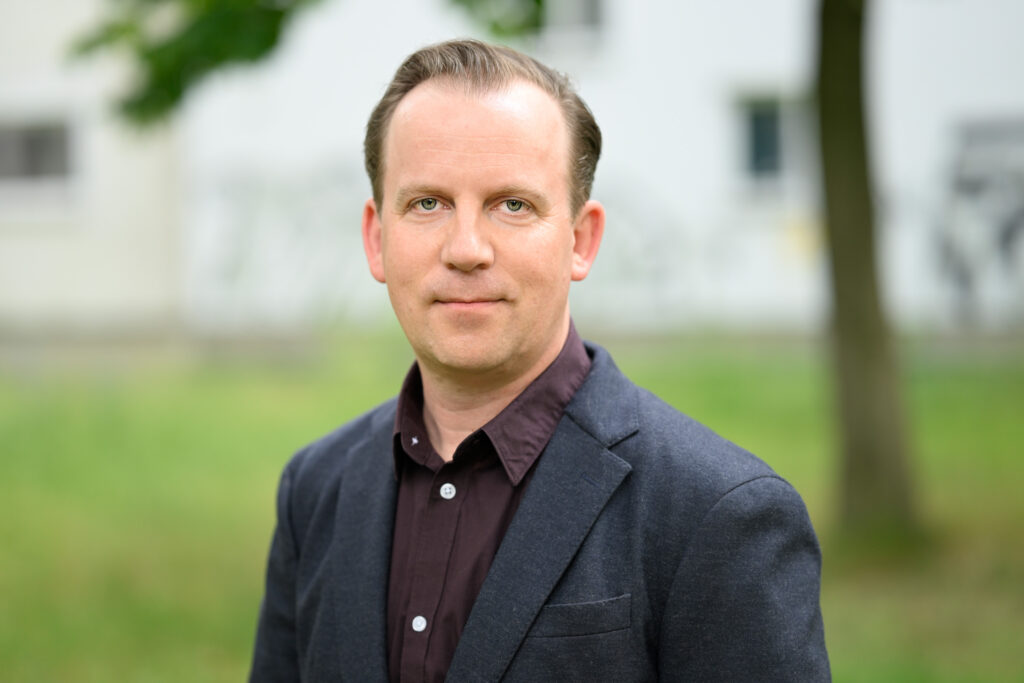
Portrait von Beda Mulzer

About me

Five decades of experience with people, culture and change

I have rarely organised my life around a linear career path. Instead, I have followed my curiosity, my drive to create, and a persistent question: how can people make something together that none of them could create alone?

That path has taken me through international film productions, music and nightlife, bars and venues, social and political projects, spiritual practice, art, theory and organisational development. For a long time, these worlds seemed separate. Looking back, I see a recurring pattern: I enter complex situations, pay close attention to what is actually happening, and create structures in which people can act, ideas can take shape and responsibility becomes visible.

Light, music and spaces

For more than 25 years, I worked on international film and cultural productions as a lighting technician, best boy, gaffer and lighting designer. I worked in Berlin, Moscow, Naples, the Cayman Islands and many other places. Film sets are highly complex social systems. Under intense time pressure, departments, creative visions, technical dependencies, hierarchies and human needs must continually come together.

As a lighting designer, I learned to make spaces, bodies and stories visible. In senior roles, I learned that a strong image can emerge only when planning, equipment, communication, attention and relationships align at the decisive moment. Much of what organisational development now calls agility, self-organisation and distributed responsibility, I first encountered as everyday practice on set.

The spaces between productions shaped me just as much. I played bass in crossover, punk and trip-hop bands for 25 years, worked as a backline technician at concerts and travelled all over Europe in tour buses. At Münzsalon, Studio U and other venues, I developed, organised and hosted numerous events. I worked behind the bar at countless events, spent a winter at Kuchi in Berlin-Mitte, and co-founded Kapital.ist (ein scheues Reh), a bar in Prenzlauer Berg.

In these spaces, I learned another kind of social intelligence: how to read an atmosphere and the people in it, shape transitions and notice conflict early. Community grows through presence, rhythm, hospitality and attention to details that can easily seem incidental.

Movement and adventure are also part of my story. Snowboarding, BMX, dance and other physical practices have sharpened my sense of risk, balance, timing and coherent movement. They taught me to navigate dynamic situations through planning, perception, experience and the ability to respond at the right moment.

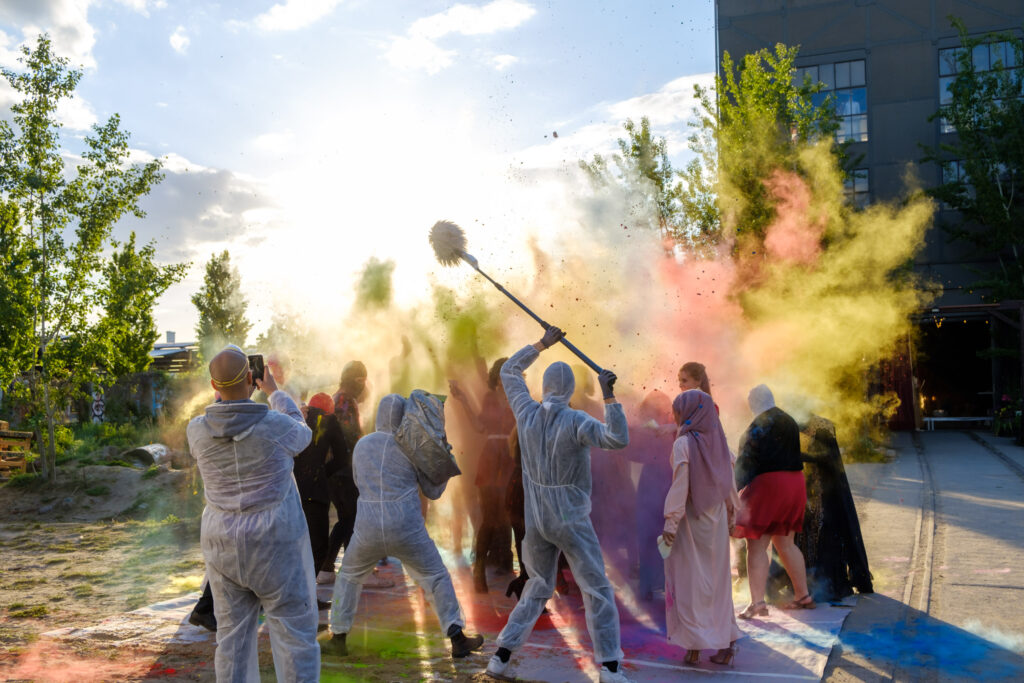
Filmdreh mit Farbpulver, Set von DRUCK

The patterns behind the experience

Over time, I wanted to understand more precisely the patterns running through these experiences. My interest in dramaturgy, mythology and systemic practice eventually led me to the School for Designing a Society in the United States. There I engaged deeply with systems theory, social cybernetics and social design: the question of how people can consciously shape their relationships, organisations and social realities.

At the same time, I became increasingly interested in how institutions and political systems work, and how citizens can take responsibility within them. I served for two years on the board of a professional association in the film industry. There, I shaped an initiative to develop occupational profiles for film lighting departments, making the skills, responsibilities and working practices of these professions legible to institutions and policymakers.

Conversations at the German Bundestag ultimately revolved around a task that runs through all my work: noticing a lived reality that often remains invisible, translating it precisely, and enabling it to have an effect within the system.


Spiritual practice and social responsibility

Alongside this, another equally important strand of my life was taking shape. For many years, I have explored meditation, embodiment and shamanic traditions of knowledge. For around a decade, I have worked and studied with the Foundation for Shamanic Studies.

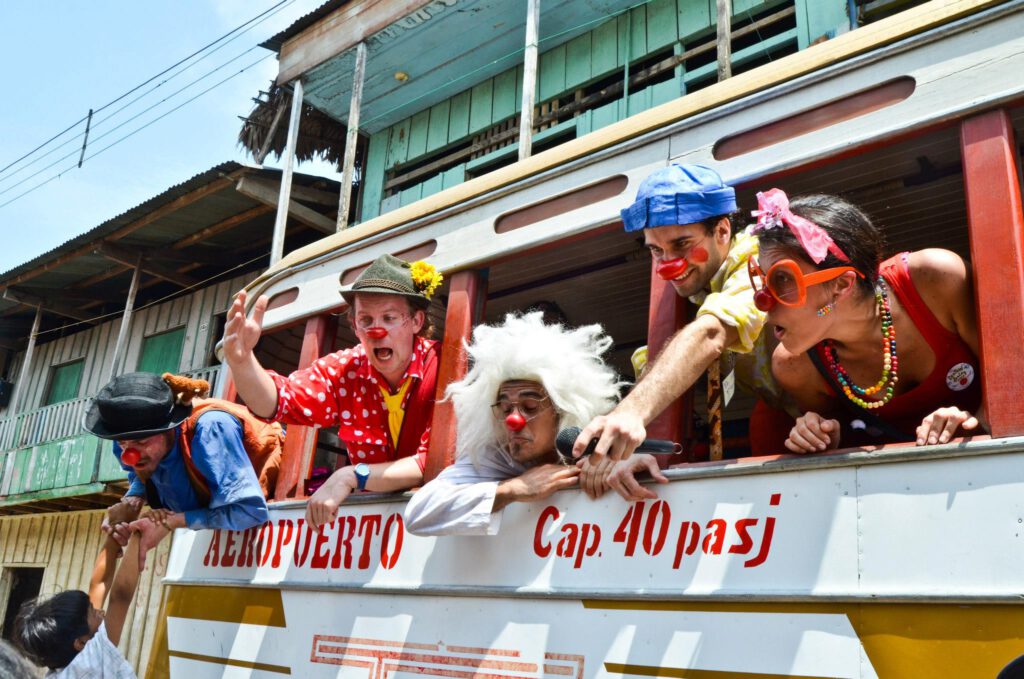
In international social projects with Patch Adams and the Gesundheit! Institute, I worked as a clown, including in Guatemala and the Peruvian Amazon. I was also responsible for psychosocial support for large groups of activists.

I worked with the Psychedelic Society Berlin on psychedelic education and awareness. Over five years, I helped run welfare spaces at several European Burning Man events. For Kiez Burn, I created a Temple of Grief and a collective ceremony for around 1,500 people.

Whether on a film set, behind a bar, in the jungle, in a welfare tent or in a ritual space, the work has often been the same at its core: paying close attention to what a situation actually calls for, taking responsibility, and creating a form that can hold people.


Cultural heritage and present-day responsibility

Another formative thread is my personal and research-based engagement with African art, decolonisation and provenance. I am German, and I grew up with African art objects. They come from cultures that are not my own, yet they are part of my personal history and my life today.

That proximity offers no simple answers. It raises demanding questions about colonial violence and possession, origin and relationship, the legacy of earlier generations, and the responsibility of those who live with that legacy today. What was handed down to us, and under what conditions? What may we care for, what must we return, and which relationships need to be rebuilt?

This is another place where systems theory, cybernetics and spiritual experience meet for me. It asks how the past continues to act in present systems, how relationships persist across time and space, and how responsibility passes between generations.


Pausing, reassessing, realigning

Beda Mulzer unterwegs mit dem Bus

A health crisis around 2019, followed by the pandemic years, interrupted the rhythm of my life. It gave me time to pause, put my experiences into a new order, and look more deeply at theory, healing, strain and change.

I trained in systemic and agile coaching, organisational development, process and change management, mediation, funding management and psychological counselling. These qualifications are woven into my practical experience. They give me metatheories, models and professional methods with which to question, differentiate and further develop what experience has taught me.


Aesthetics in action

What connects these different areas for me is aesthetics in action: the quality of how something is done, with attention, precision and vitality, in a form that fits the situation.

I recognise it in light that reveals a space or a story. In the groove of a band and a well-timed movement on a snowboard. In responsible engagement with cultural heritage. In a ritual that gives collective grief a form. In an occupational profile that makes invisible work socially legible. In coaching, when someone recognises their strengths and finds a way to express them. In organisational development, when a team develops a way of working that is effective, sustainable and alive.

For me, these experiences form a continuum. We live within fields of relationships, histories, bodies, images, institutions, power and meaning. The ability to perceive connections and recurring patterns within them is now the foundation of my work.

I work with individuals, teams and organisations to see their situation more clearly, understand their intentions and turn them into concrete ways of acting. My practice is attentive, structured and responsive. Its purpose is to help people find orientation within complexity and bring what is already present into view, into form and into effect.

Shall we talk?

30 minutes, free, no strings attached.

Scroll to Top